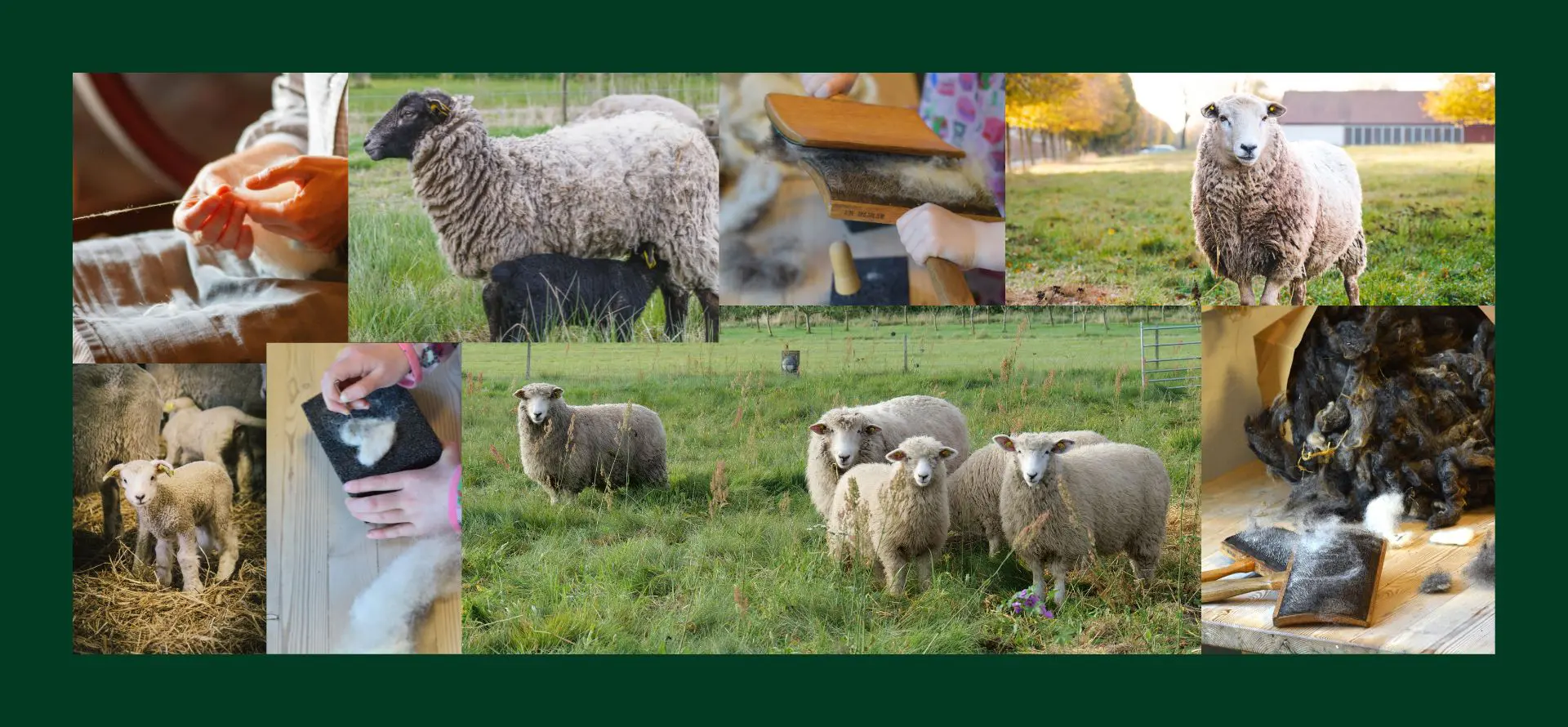
A teaching course about livestock and in particular the role of sheep in Danish agricultural history
The sheep is one of the world's oldest domestic animals. The sheep we know today are descended from the wild breed Mouflon, which still lives in Asia and Europe. The sheep came to Denmark with the introduction of agriculture along with cattle about 6000 years ago.
Originally, sheep were used for meat, as wild sheep did not have much wool. Later, sheep with more wool were bred to make clothes.
It was especially the women in the old farming communities who took responsibility for the tasks of processing wool and linen and producing clothes for both everyday and festive occasions. The men's tasks were linked to the earliest processes in the processing, which often required strength and more hands. The processing of the wool took a long time. First, the freshly washed sheep had to be sheared. Then the wool had to be sorted, carded, spun and woven or knitted into clothes.
In a FROM SHEEP TO COAT course, students will have their own hands in the old crafts. They will feel the wool – both before and after it has been washed. The wool will be carded, spun, felted and perhaps also knitted, crocheted or woven.
At the Green Museum, all of our livestock are living cultural heritage and the breeds are old Danish breeds. On a FROM SHEEP TO COAT course, we will of course visit the museum's own sheep. The course starts with an age-appropriate dialogue-based tour of relevant exhibitions inside, but at the sheep outside. If it fits into the day's feeding program, the students are responsible for feeding the sheep today, and we will talk about the characteristics of the different breeds, and feel the wool from the different breeds.
TARGET GROUP
School enrollment
Intermediate level
SUBJECT
Students' all-round development
Danish
History
Crafts and Design
Time consumption and indicative program
3.5 hours (if you want time to explore the exhibitions on your own, make sure to set aside extra time for this after the course.)
GUIDELINE PROGRAM:
9.30: Arrival at the Green Museum
9.45 – 11: Tour both inside and outside
11 – 11.30: Break and packed lunches
11.30 – 13.00: Working with the wool
13.00: Closing and thanks for today
Number
Max 25 people/class
Price
1500 kr
NOTE
Bring packed lunches – there is no possibility to buy food at the museum.
The museum has a huge area and during this course we will also be going around the outdoor area and visiting the animals. The children should therefore be prepared to walk quite a bit as part of the course.
Competency goals
- The student has knowledge about the basis of life and production in the past and present.
- The student can gain knowledge about history through the use of historical scenarios.
- The student can put their own and others' historical narratives into perspective in time and space.
- The student can relate changes in everyday life and living conditions over time to their own life.
- The student can compare significant features of historical periods.
- The student can alternate between listening and speaking.
- The student has knowledge of turn taking.
- The student can use spoken language in conversation and collaboration.