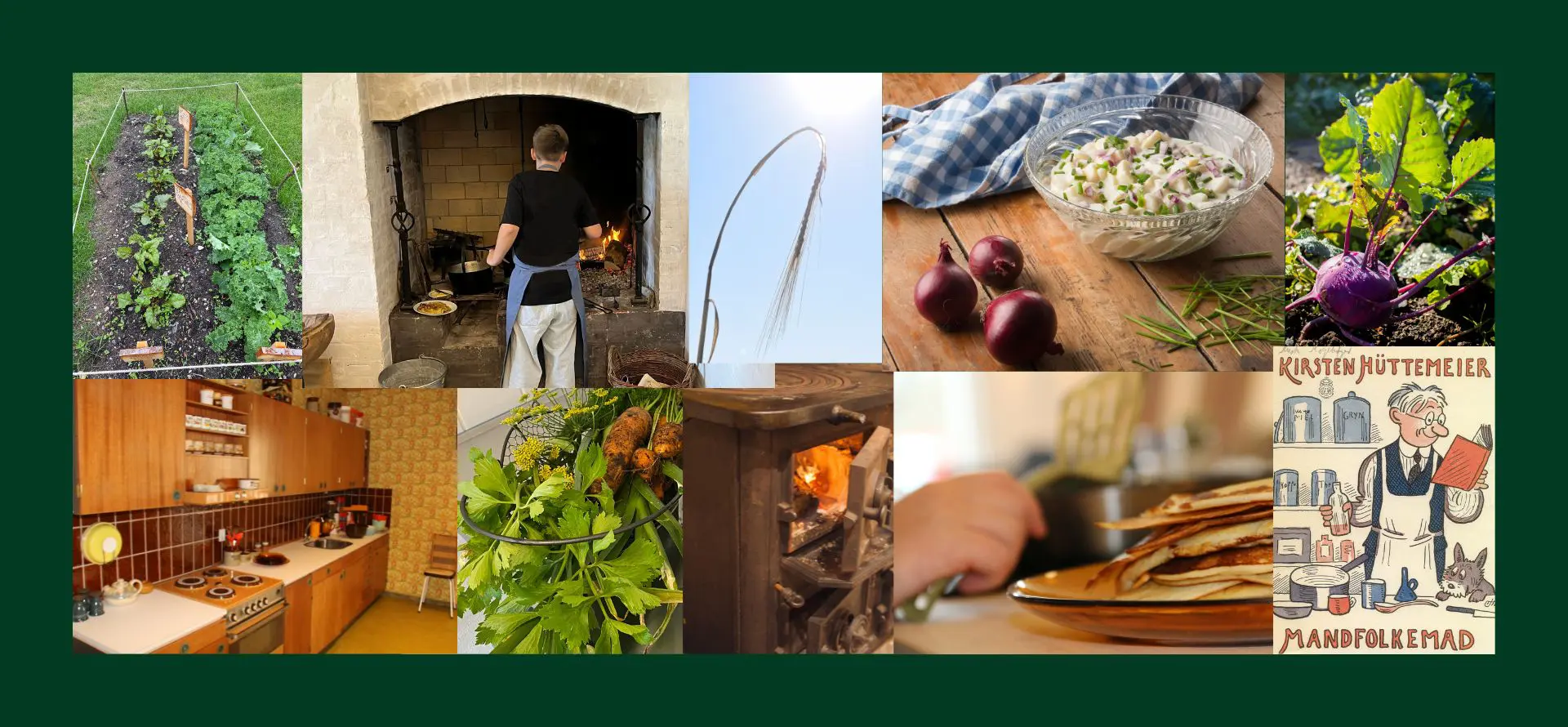
A course on the cultural history of food
15,000 years ago, Stone Age man worked hard for every single meal! Today we have supermarkets, refrigerators, ovens and stoves that take a lot of the work out of it. But how did we get from Stone Age man's food over a fire to where we are today. What has influenced the development and what do you think the future looks like? In a teaching course about FOOD at Det Grønne Museum, we work with the cultural history of food in practice.
The course is based on traditional Danish ingredients, and especially what is available in the season in our 6000 m2 garden.2 large agricultural historical garden.
The course starts with a short welcome and presentation of the museum, as well as a short tour of selected exhibitions. This is followed by an introduction to the agricultural history garden and our historical kitchens, where the students will get their hands on the historical dumpling dough. The students will stir, bake, cook and taste their way through history.
A course about FOOD takes place primarily in the HOUSE OF FOOD. The students are divided into groups and work in kitchens that span several hundred years of Danish culinary history. We move from the hearth in the 17th century, over the wood-burning stove in the 19th century to the gas stove in the 1950s, the electric hobs in the 60s and 70s and all the way up to the modern induction stove in the present day. We work with recipes, ingredients and kitchen utensils that fit the time period of the kitchen.
A teaching course about food concludes with a communal buffet and evaluation of the work in the various kitchens.
TARGET GROUP
From the 6th grade of elementary school.
Similar courses can easily be adapted to high school and higher education. For example, as part of the apprenticeship for future culinary arts teachers.
SUBJECT
Students' all-round development
Danish
History
Food knowledge
Time consumption and indicative program
3-4 hours (if you want time to explore the exhibitions on your own, there is an option for this after the course has ended.)
GUIDELINE PROGRAM:
9.45: Arrival at the Green Museum
10 – 11: Guided tour
11 – 11.30: Break and packed lunches
11.30 – 13.15: Work in the historic kitchens
13.15 – 14: Buffet, evaluation of the day and cleanup
Number
Maximum 25 people
Price
1900 DKK incl. Raw materials (the price includes a museum facilitator throughout the entire process. If more than one facilitator is needed, the price will increase accordingly).
NOTE
Bring packed lunches – the buffet consists more of tastings than an actual meal.
Competency goals
- The student can interpret meals with an understanding of values, culture and living conditions.
- The student has knowledge about food and meal cultures specific to time and place.
- The student can apply cooking techniques and implement ideas in cooking.
- The student can put their own and others' historical narratives into perspective in time and space.
- The student can relate changes in everyday life and living conditions over time to their own life.
- The student can compare significant features of historical periods.
Teaching materials
Use the links below to find teaching material that can be used in continuation of the FOOD course.
Here you will find a selection of recipes that are often included in a teaching course about FOOD: Selected Recipes
Educational material about Babette's Banquet – on the way