




The reward system
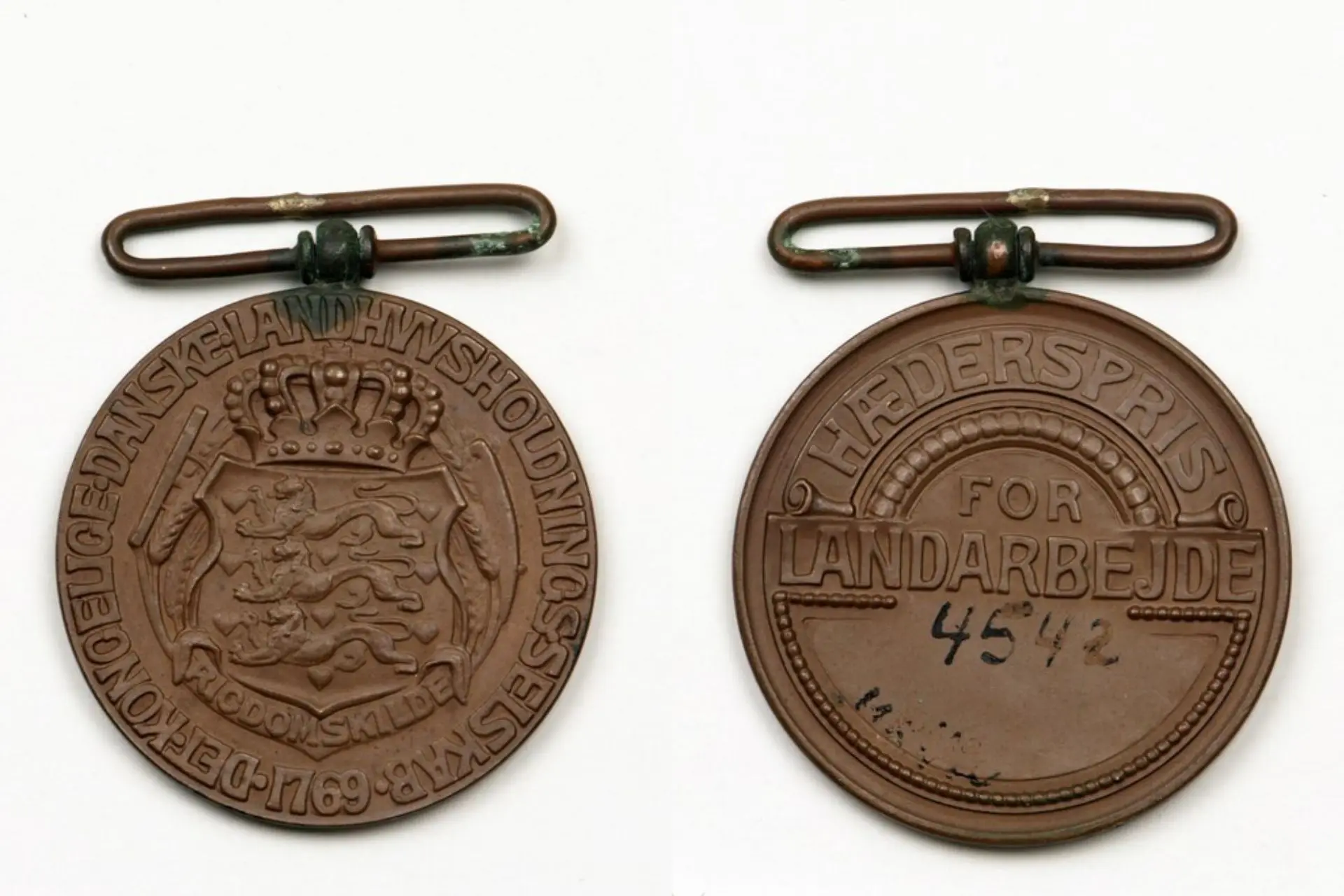
From its foundation in 1769 until well into the 1830s, the entire basis of the Agricultural Society's existence was primarily tied to the awarding of prizes and honorary awards. These were not only intended for farmers, as craftsmen, artists, business people and others who had made particularly spectacular or meritorious contributions were also eligible.
Since Denmark was an agricultural country, and the company was founded almost at the same time as the major agricultural reforms took off, it was largely farmers and other rural dwellers who were gifted by the company.
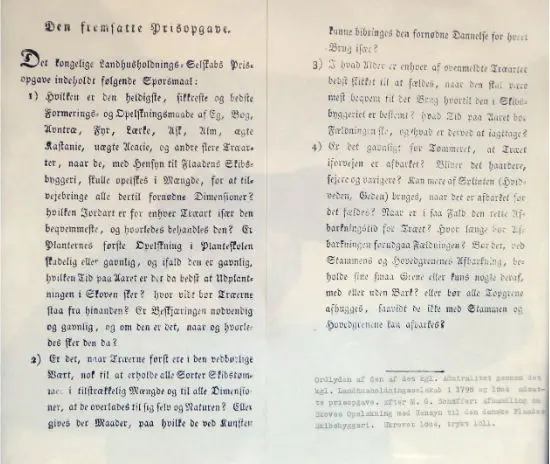
The procedure was that each year the management published lists with a number of specific issues and tasks that the company would like to see resolved.

Theoretical solutions
Specifically, the tasks could be divided into two categories: Theoretical and practical tasks.
The theoretical tasks consisted, as the title suggests, of a written answer to a question. The question could, for example, be the preparation of “A critical and comparative view of rural living conditions in Denmark, the Duchies and a number of European countries”. It could also have a more down-to-earth character. That is the answer to the question ”About Thyeboe Cheese Properties and more"a good example of.
It was usually already well-educated people, priests, estate managers and other civil servants who had the time and desire to put pen to paper. If the theoretical assignment was approved by the company, the lucky winner could expect, as an extra bonus, to have the answer printed in one of the company's books or journals. The idea was that other progressive people in the countryside could also benefit from it.
Practical tasks
The practical tasks were, literally, of a much more down-to-earth nature and clearly aimed at improving and streamlining the work in the field, meadow, forest, stable and garden.
Here, as with the theoretical tasks, there could be very specific and geographical problems that needed to be solved. For example, it could be attempts to improve agriculture on Bornholm, growing tobacco around Fredericia, or erecting new fences and planting trees in a single parish in eastern Himmerland.
Here the idea of progress really came into focus, which became obvious as the agricultural reforms were rolled out around 1800. Farmers who had the courage to break with the traditional village community and move their farm out into the open field were welcome to be considered. Farmers who experimented with a new crop such as the potato or on their own initiative did an extraordinary amount of hard work to improve the agricultural land were also obvious candidates for a prize.
Social developments affect the premium system
The nature of the award itself changed over time and under the influence of developments in society. In the 1830s, the company stopped publishing theoretical and practical tasks that it wanted to solve. This is probably due to the fact that the land reform was now being implemented, and much new land had been cleared, drained and cultivated.
The society continued to award prizes, but now it was not just about solving a set task. The geographical focus moved further west. In the 1850s-1930s, it was more the farmers and pioneers who took on the arduous work of cultivating the enormous Jutland heath that were considered for one of the society's prizes.
