New plow types in focus
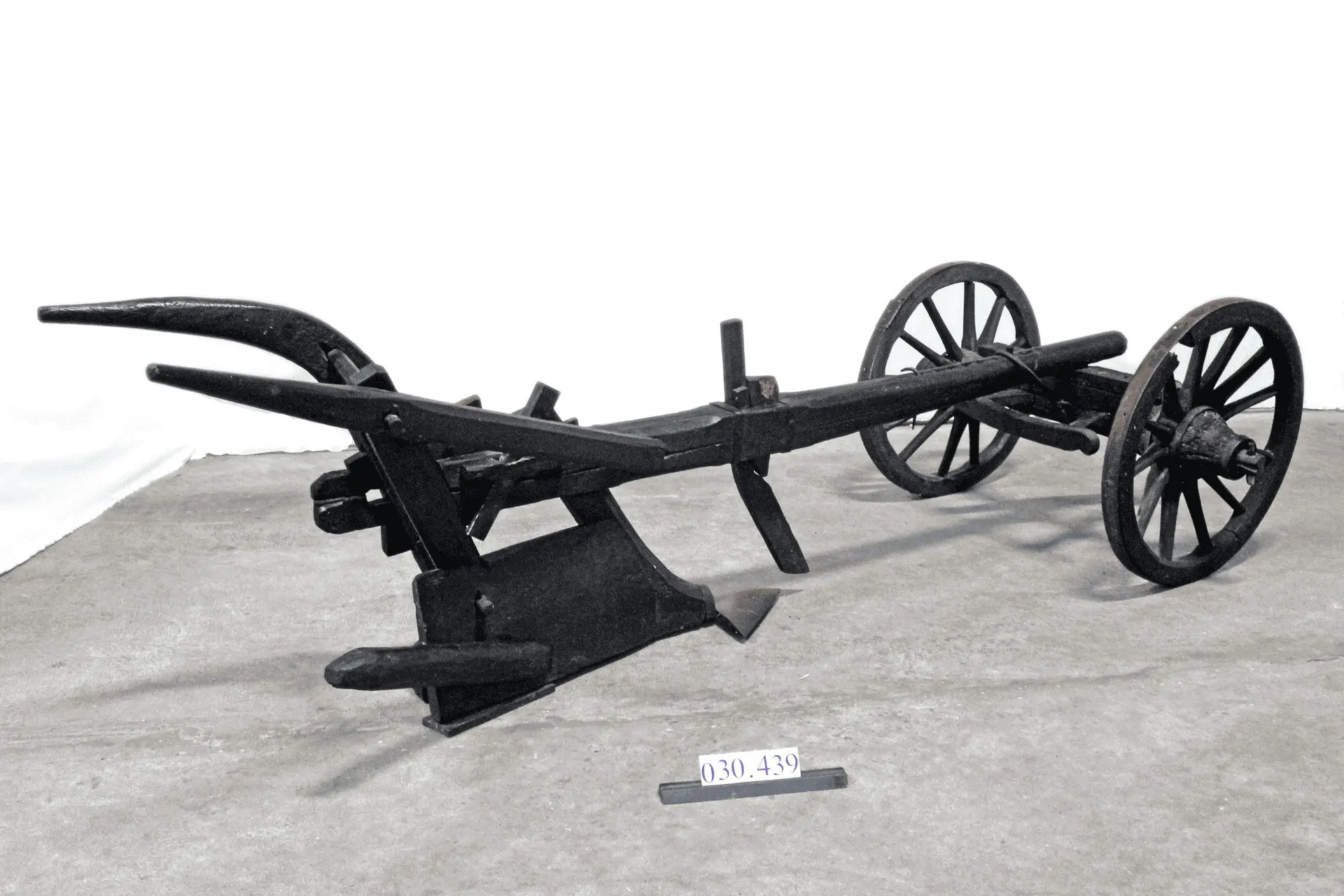
Right from its establishment in 1769, one of the Agricultural Society's biggest priorities was how to increase harvest yields. This meant that there was great interest in all new crops and field tools that could contribute to this development. Here, new types of ploughs were not the least of the focus. There were several good reasons for this. For more than a thousand years, people in Denmark and Europe had used the traditional and heavy wheel plough, which was largely made of wood, ran on wheels and required up to eight horses or oxen to pull.
Better plows that slid and cut through the soil easily literally freed up horses so that their horsepower could be used for other tasks. Not needing as many horses as before meant that there was no need to set aside pastures and oat fields for horse feed. This opened up the possibility of putting these vacant areas to use as rolling grain fields, whose crops could benefit trade, turnover and food supply.
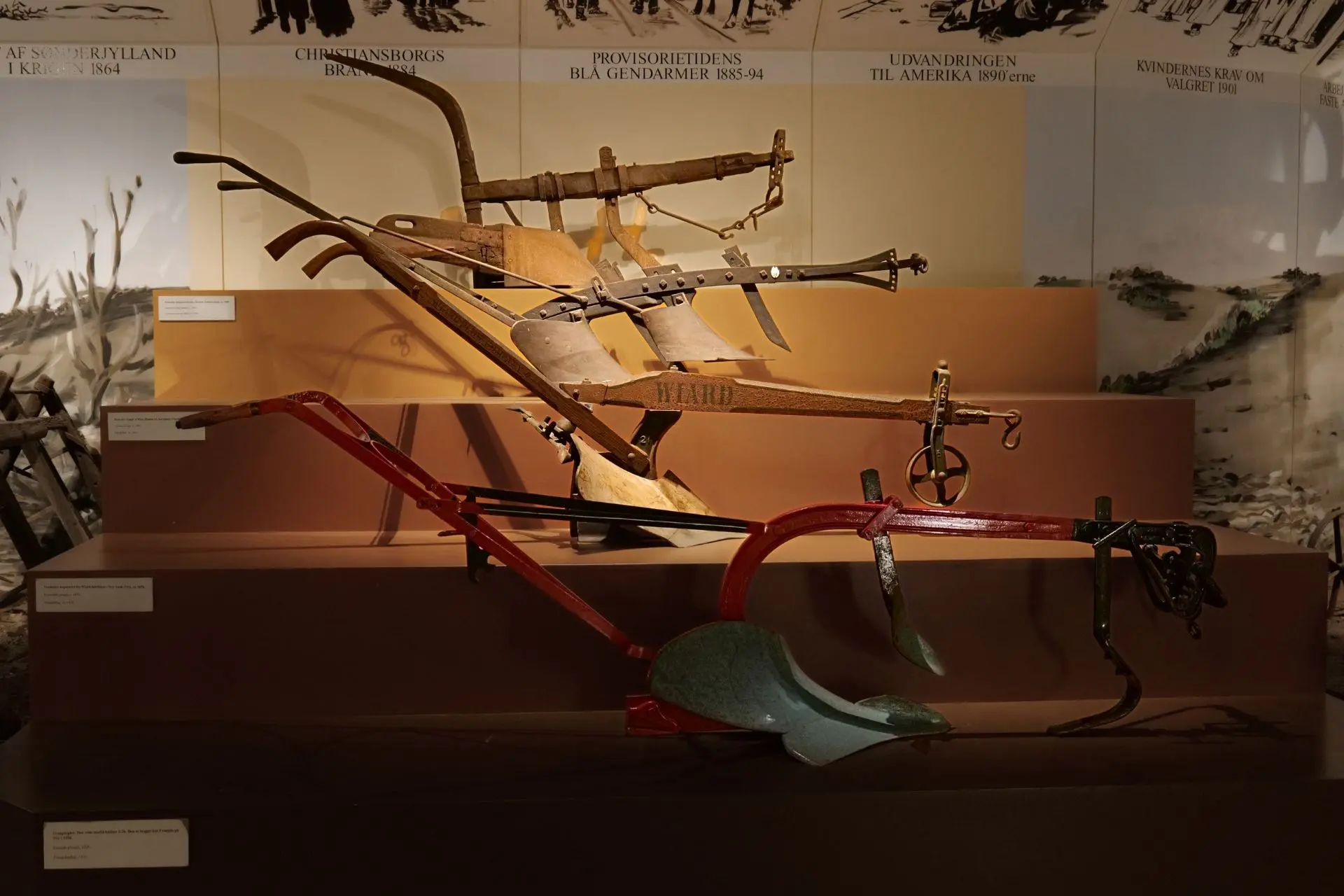
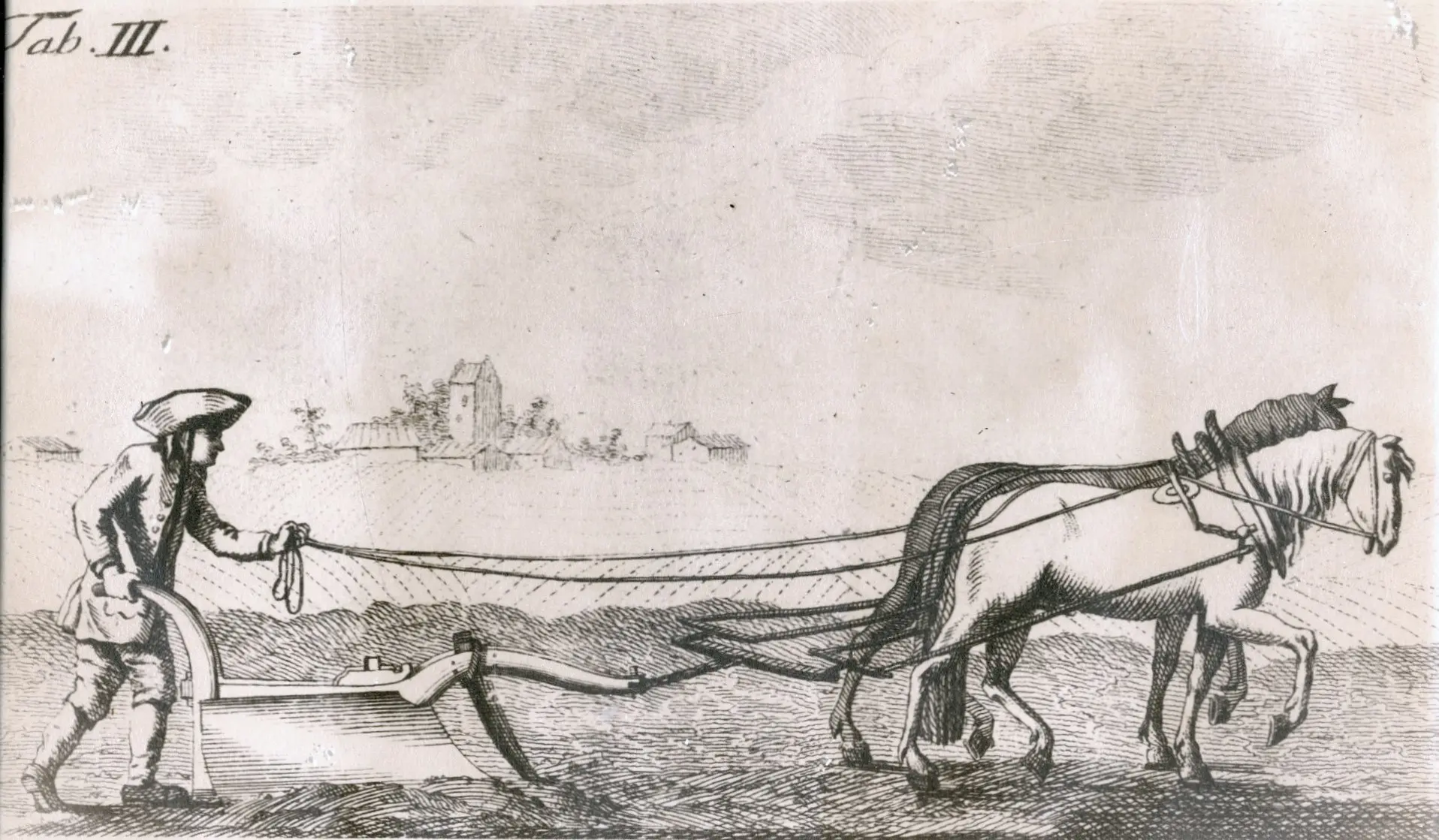
For the same reason, clever and resourceful people in 18th-century Britain and the Netherlands experimented with developing entirely new plough designs. The result was various versions of a lightweight triangular plough that quickly became known as a “swing plough” due to its manoeuvrability.
Denmark's first plow test
Since there were close trade links between Britain and Norway, the first English swing ploughs appeared at the Falkensten manor house on the Oslofjord. There was already an extensive iron industry in these parts, so before long the local blacksmiths were trying to make their own Norwegian swing ploughs after the British ones.
When the Landshuholdningsselskabet in Copenhagen heard about the production of the Norwegian copy products, they immediately contacted the bailiff at Falkensten, who was also one of the Norwegian members of the company. In the letter, the bailiff was asked to send two swing ploughs as well as an experienced man who could drive them to Zealand. The purpose of this order was not only to get the new ploughs to Denmark, but also to see them in action. In order to learn more about the advantages of the swing plough, it was naturally necessary to compare it with other types of plough. Then, it was possible to see for yourself which type of plough worked best here.
Together with another Norwegian plough, a traditional wheel plough and last but not least, a copy of the famous Scottish Rotherham plough, the ploughs from Falkensten were now to be put to the test. It was Denmark's first plough test, which the company was behind. The demonstration took place at 10:00 on Thursday, 18 October 1770, in the fields at Bernstorff Castle.
The wheel plow: Completely hopeless to work with
The plough test clearly came out in favour of the two ploughs from Falkensten. The third Norwegian plough, on the other hand, had not done the job quite so well. Even more surprising was that the Rotherham plough, whose design had otherwise garnered international recognition, actually did not do particularly well. This was probably not due to the plough itself, but rather to the fact that the man who drove the horses and plough had never driven a Rotherham plough. The worst of all the demonstration ploughs was the wheel plough, ”whose Slowness and Time Waste"in the judges' opinion, it made it completely hopeless to work with."
In the wake of the great public interest in the first plough test, the company arranged such demonstration ploughings every year until 1775. For these demonstrations, the company therefore ordered no fewer than ten new swing ploughs from Norway.