




The Green Museum receives 4.3 million for a new research project
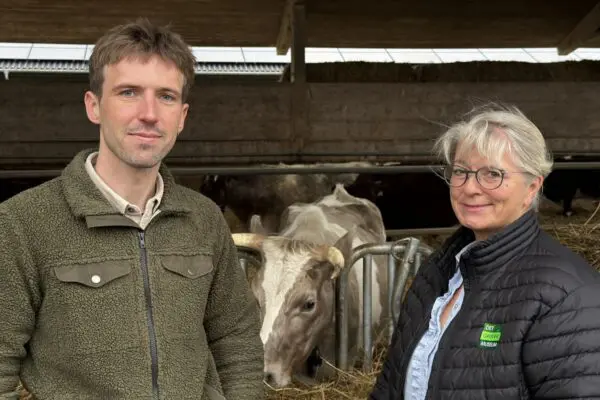
Director of the Green Museum Anne Bjerrekær and head of collections Esben Bøgh Sørensen in front of the museum's old cattle breeds.
Over the next three years, the Green Museum, together with the University of Southern Denmark and Aarhus University, will investigate the industrialization of Danish livestock farming after the Second World War.
Questions about animal welfare, climate and the environment are a major part of the agricultural debate today. Yet we know surprisingly little about when and how modern, industrialized animal husbandry emerged – and why it developed in the direction it did.
Research into the recent history of livestock farming
The new research project 'Livestock in transition' will now shed light on this. The Green Museum has received 4.3 million DKK from the Augustinus Foundation for a three-year research project in collaboration with the University of Southern Denmark and Aarhus University. In the project, the three partners will investigate the industrialization of livestock farming from the time after the Second World War to the present day.
Domestic animals as living cultural heritage
The project focuses on how developments have changed livestock production, the relationship between humans and animals, and our cultural understanding of livestock as living cultural heritage. At the same time, the project places livestock production in a larger historical context, where it stands in a field of tension between Denmark's self-understanding as an agricultural country and the green transition that agriculture is currently taking its first steps towards.
Research-based knowledge and dissemination
Project manager Esben Bøgh Sørensen, museum curator and head of collections at The Green Museum, says:
“Livestock production today plays a central role in some of the most important societal debates about climate, animal welfare and land use. Yet we lack a comprehensive historical view of how industrialized livestock farming came about. With this generous grant from The Augustine Foundation We now have the opportunity to examine a crucial, but hitherto underexposed, chapter in Danish history.”
The research group also includes Paul Sharp (SDU), Mette Vaarst (AU) and Hanne Kongsted (AU).
With the project, the Green Museum strengthens its research efforts and ambition to contribute with research-based knowledge that can both qualify the public debate and form the basis for engaging communication to the museum's guests.
The project is generously supported by the Augustinus Foundation, which thus contributes to new historical and interdisciplinary knowledge about a topic of great societal relevance – both historically and currently.
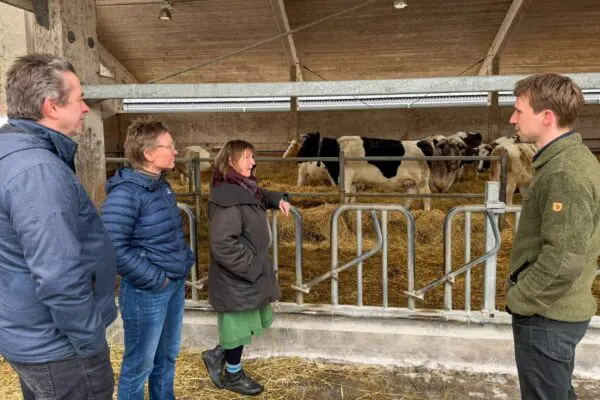
During the first meeting, there was also time to look at the Green Museum's old Danish cattle breeds.
Facts:
Project: Pets in distress
Period: 2026–2028
Grant: DKK 4.3 million.
Funder: Augustinus Foundation
