




What could you win?
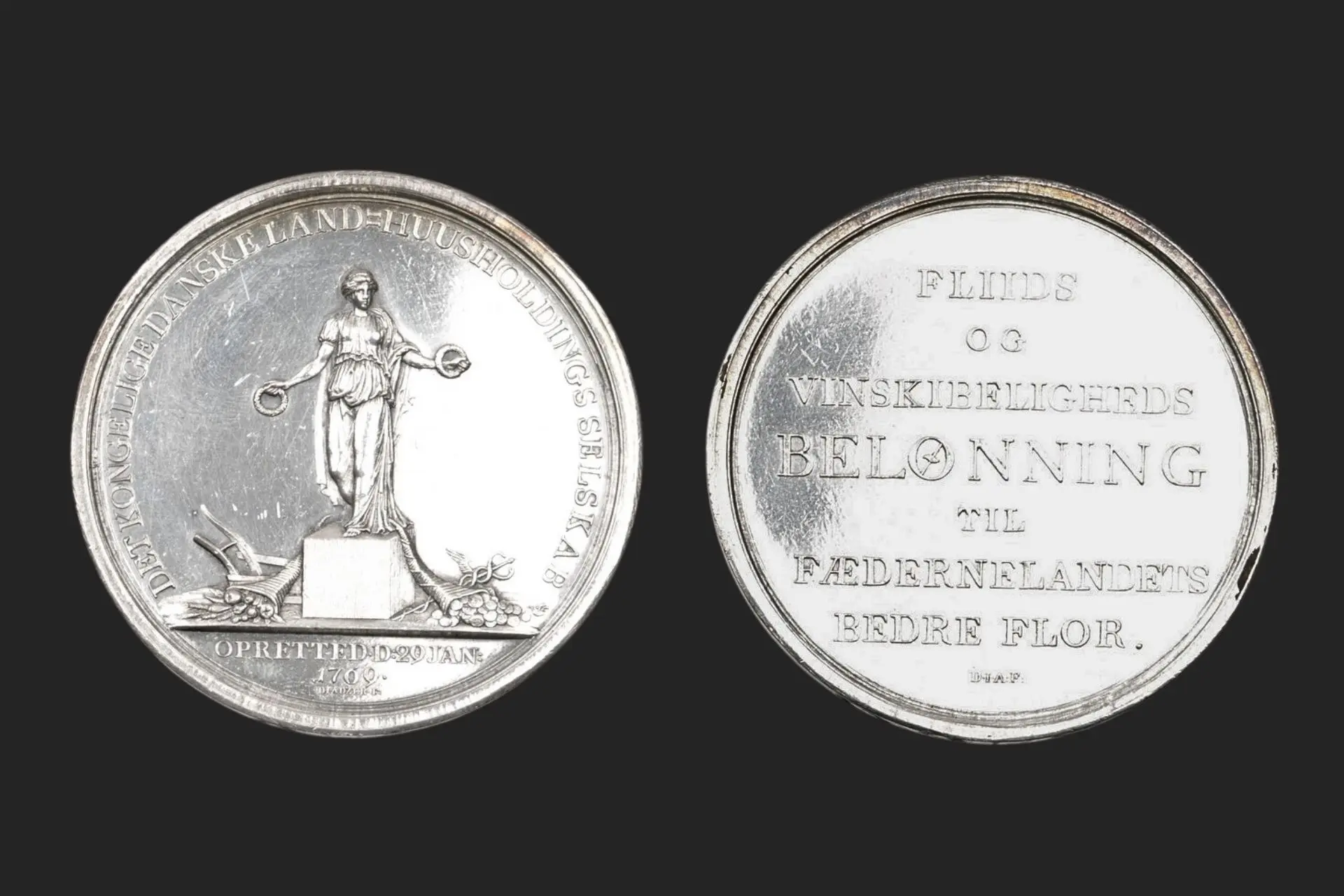
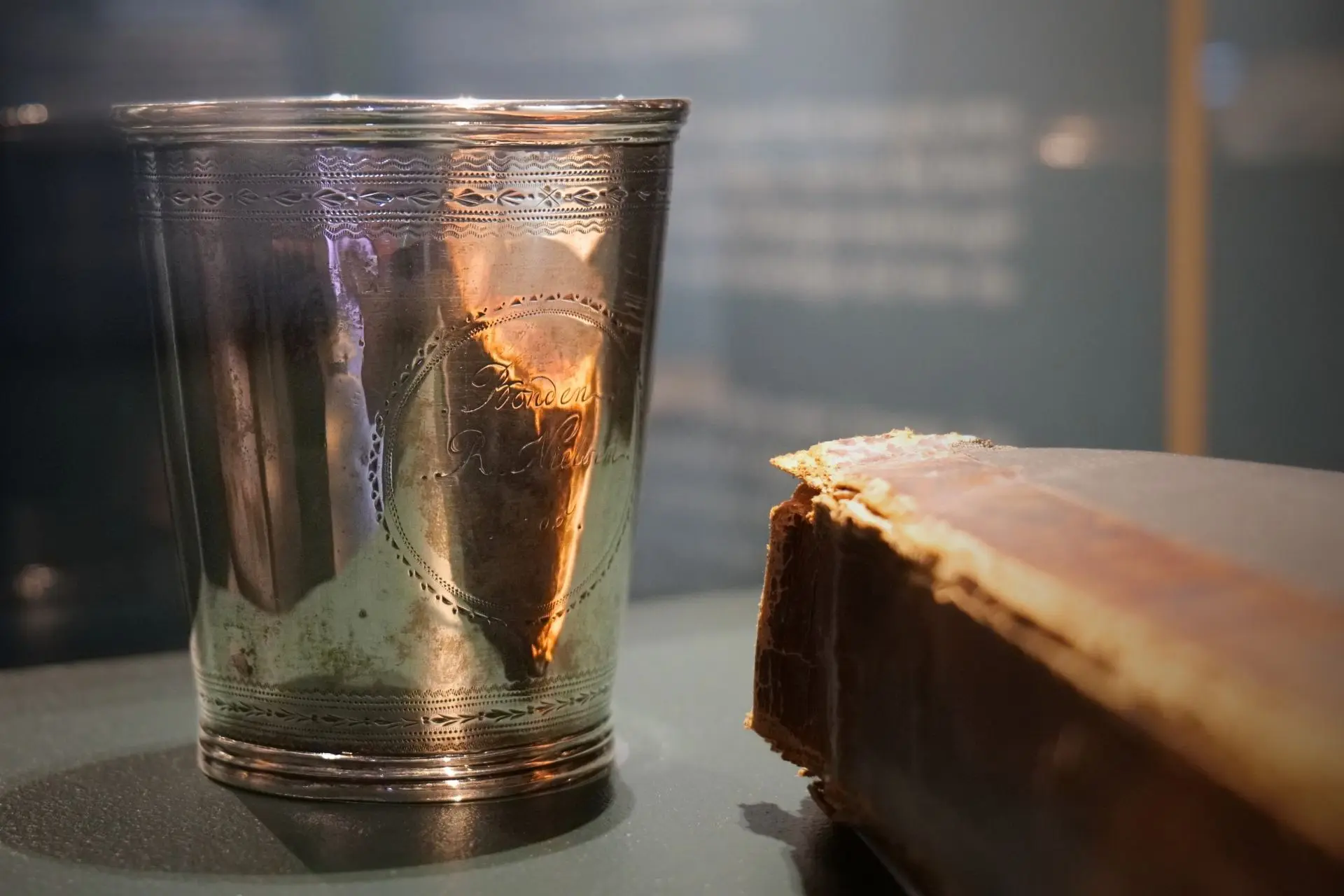
In the early years, it was a gold or silver medal, the size and value of which was adjusted to the scope of the prize task. It was naturally a nice gift, but perhaps also a little impractical to carry around. Inspired by similar societies and award ceremonies in Great Britain, the Agricultural Society therefore decided in 1804 to upgrade the prizes. Now they went from medals to beautiful and manageable silver cups that could stand out on the shelf and daily remind both the winner himself and others of the effort.
Among the recipients of such a silver cup is the farmer Jens Christiansen Bamberg in 1806. Bamberg had not only moved his farm out of the village and rebuilt it on the bare field. He had also had the time and energy to cultivate 14 acres of land that had previously just lain unused in mud and silt. The industrious farmer had dug ditches so that the water could drain away. The effort did not stop there, as Bamberg was now busy clearing the rest of the meadow of moss and weeds.
Diligence and ability
In 1871, the Funen farmer Jørgen Christensen also received an engraved silver cup from the company. In twenty years, he had not only built up a dilapidated farm, cultivated 26 acres of lean heathland and cleared his fields of large stones. The effort that really resonated throughout Funen and had also reached the Landhusholdningsselskabet in Copenhagen was the farmer's effort in fruit growing. Christensen had planted 83 apple, pear, cherry and mulberry trees. There had also been space and surplus at the farm itself to plant poplars, chestnut and walnut trees. It is therefore not surprising that the inscription on Jørgen Christensen's silver cup praises him for his "Diligence and Ability".
No expense was spared when it came to making silver cups. The task of making the prizes was therefore always left to Copenhagen's best craftsmen and silversmiths. Unlike medals, such cups had room for a small inscription with the year, the winner's name and perhaps a short description of the task completed. It could, for example, be "To the active farmer" or more specifically "To Bertel Jensen for the good cultivation of his land with the use of a spade". For good reasons, the majority of such cups ended up in the country, where they have since been passed down from generation to generation. For the same reason, only a limited number of these prizes are still in Danish museums today.
In the nature of things, an inscription on a silver cup could not tell much about a fine piece of work, so a diploma soon followed the cup. From here it was not long before the Agricultural Society decided that a diploma in itself could also constitute a prize.
