New chemical agents
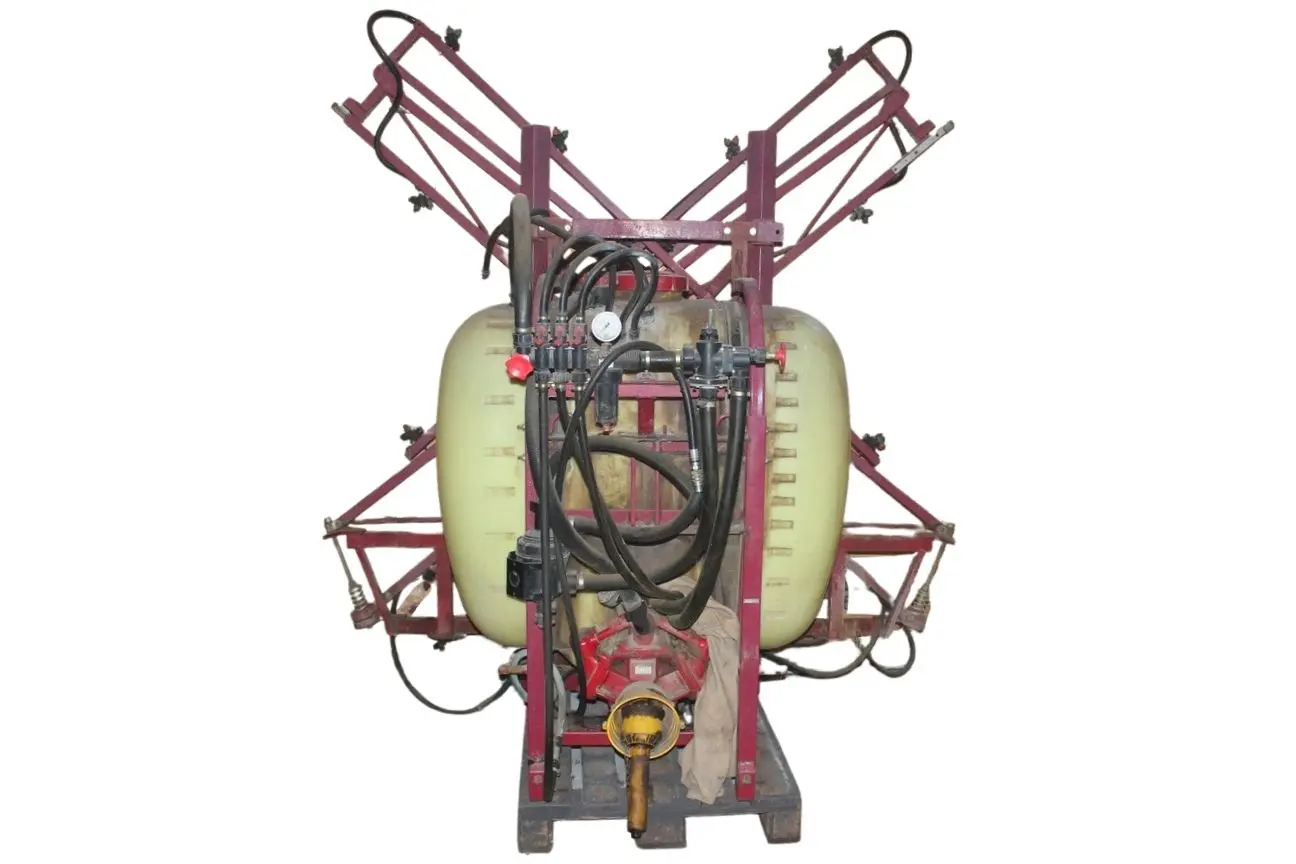
“There is a Hardi Sprayer for every need,” said an advertisement in 1960. The need to be met was the control of weeds in the beet rows and potato fields. The hard method was of course to weed out weeds by hand and with a hoe, but around 1900 agriculture gained new chemical agents. At first, it was bluestone, but later other herbicides were added.
Initially, the chemicals were transported to the field on a horse-drawn cart, from where they were spread from a barrel designed for the purpose. Tractors made it possible to spread the herbicides much faster and over much larger areas than previously, but this required efficient field sprayers that could be mounted on the tractor.
It was a gardener from Zealand who solved the problem for Danish farmers with the invention of a pump with two valves. The gardener's first name was Hartvig, and from there it was apparently not far to naming the pump system "Hardi" and putting it into production. The pump itself with an eight-meter spreader boom, whose nozzles sprayed the chemicals, could be obtained for 600 kroner around 1960. Then a carrying frame also came with it. It was used for the barrel of chemicals, which the farmer had to invest in himself. Later, the gardener's company expanded the concept with even larger pumps and associated containers that could hold up to 1,000 liters of herbicide in one and the same portion.
The spreader booms also became longer and longer, so that larger parts of the field could be covered in one spreading round. For the same reason, it was no longer possible to simply tie the poison container to the tractor. Instead, trailers with larger poison containers and spraying systems that could be hitched to the tractor were now produced.