




Goat fever hits the Green Museum
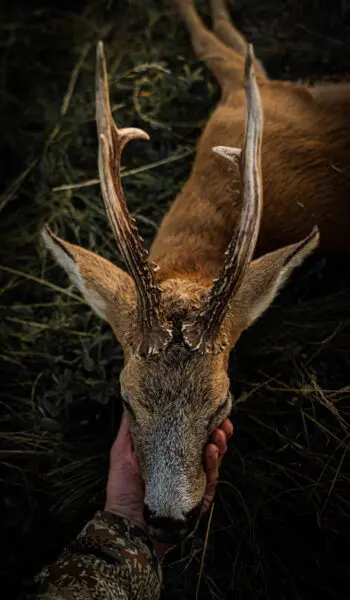
Photo taken by Jonas Nørregård – The hunter looks at the downed buck.
On May 16, the special exhibition 'Buck Fever' will open at the Green Museum. The exhibition brings together a diverse selection of Danish buck trophies and focuses on the history, traditions and relationship between humans, nature and hunting.
For many Danish hunters, May 16th is something special. Since the Hunting Act of 1967 made the date the official opening day for buck hunting, the day has marked the beginning of a new hunting season and a strong tradition in Danish hunting culture.
But the hunting of roe deer goes back much further. Roe deer have lived in the Danish region for more than 10,000 years, and humans and roe deer have gone hand in hand ever since. First as an important source of food – later as part of the hunting culture, traditions and nature experiences.
The diversity of roe deer antlers
The exhibition displays a selection of the museum's collection of Danish buck trophies. The long glass corridor forms the framework for the exhibition, where the variety and distinctiveness of the buck trophies clearly stand out.
Some antlers are symmetrical and strong, while others are small, crooked or abnormal. Overall, the exhibition provides an insight into both the biology of the roebuck and the special trophy tradition that has become an important part of buck hunting over time.
For the roebuck, the antlers are an important tool in the fight for territories and females. For the hunter, the antlers become a trophy – a symbol that can hold stories of hunting, experience, luck and achievement.
Hunting, nature and the role of man
The exhibition also touches on the issues related to hunting and management of roe deer today. The summer hunt for bucks is linked, among other things, to the desire to regulate populations and influence the development of the animals.
At the same time, the exhibition points to the complex relationship between humans and nature. Today, deer live in a landscape that has been shaped by humans for millennia, and hunting is part of the way humans continue to influence nature.
The exhibition Goat fever can be experienced in the glass corridor at the Green Museum from May 16th until the end of 2026.
